

If you have ever held a bottle of essential oil and a hydrosol spray side by side, you may have wondered why one costs so much more than the other, and why the instructions are so different: one says "just a few drops, always diluted", the other lets you "spray freely". The answer lies in the process that produces them. They are born together, from the same still and the same plant, and they separate for a simple reason: density.
Both come from the same distillation
The most common way to extract essential oil is steam distillation. The plant (leaves, flowers or bark, depending on the species) goes into a boiler. Steam passes through the plant material and, along the way, carries with it the volatile aromatic compounds held in the plant's cells.
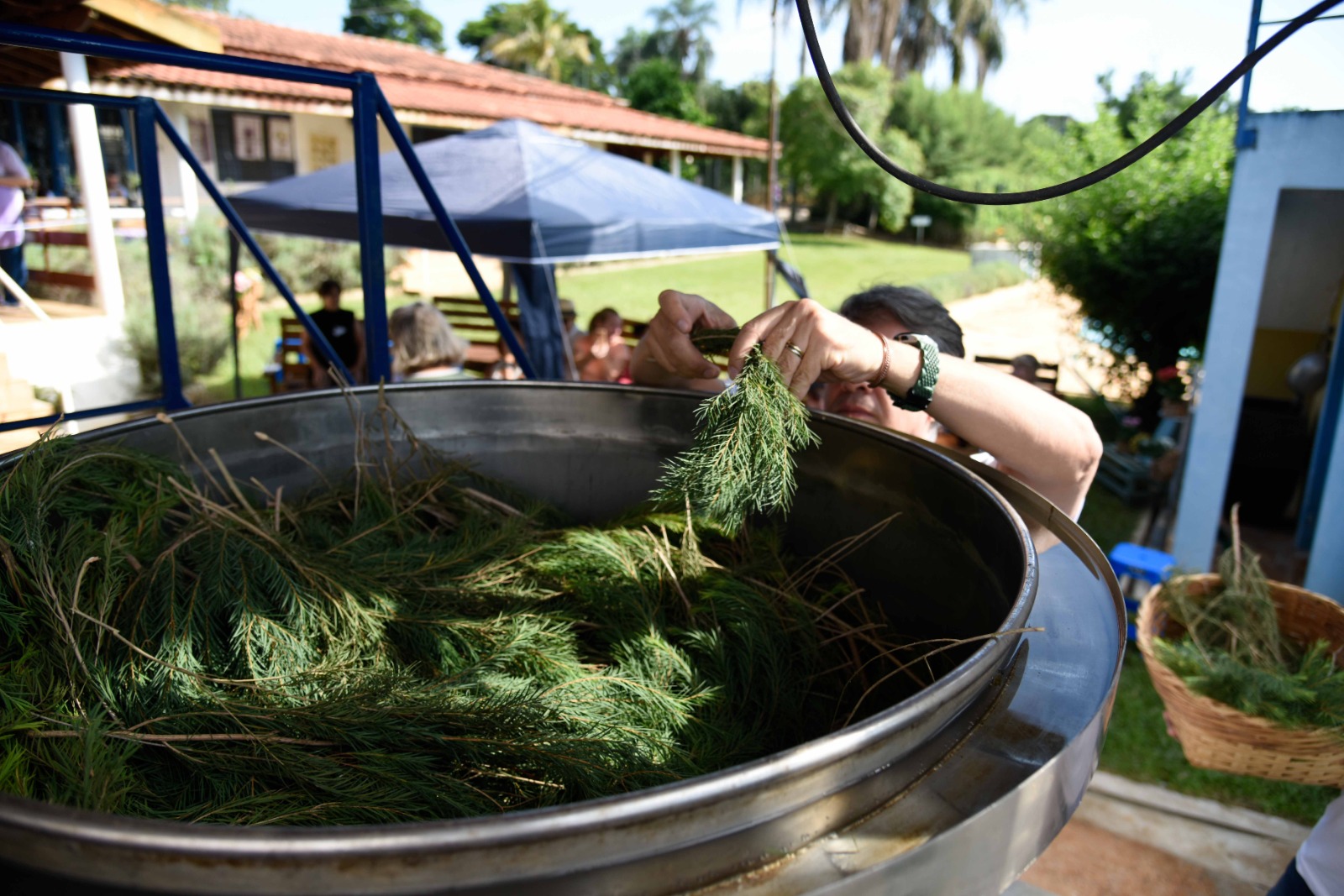 Fresh branches being placed in the distillation boiler, before the steam starts passing through the plant material
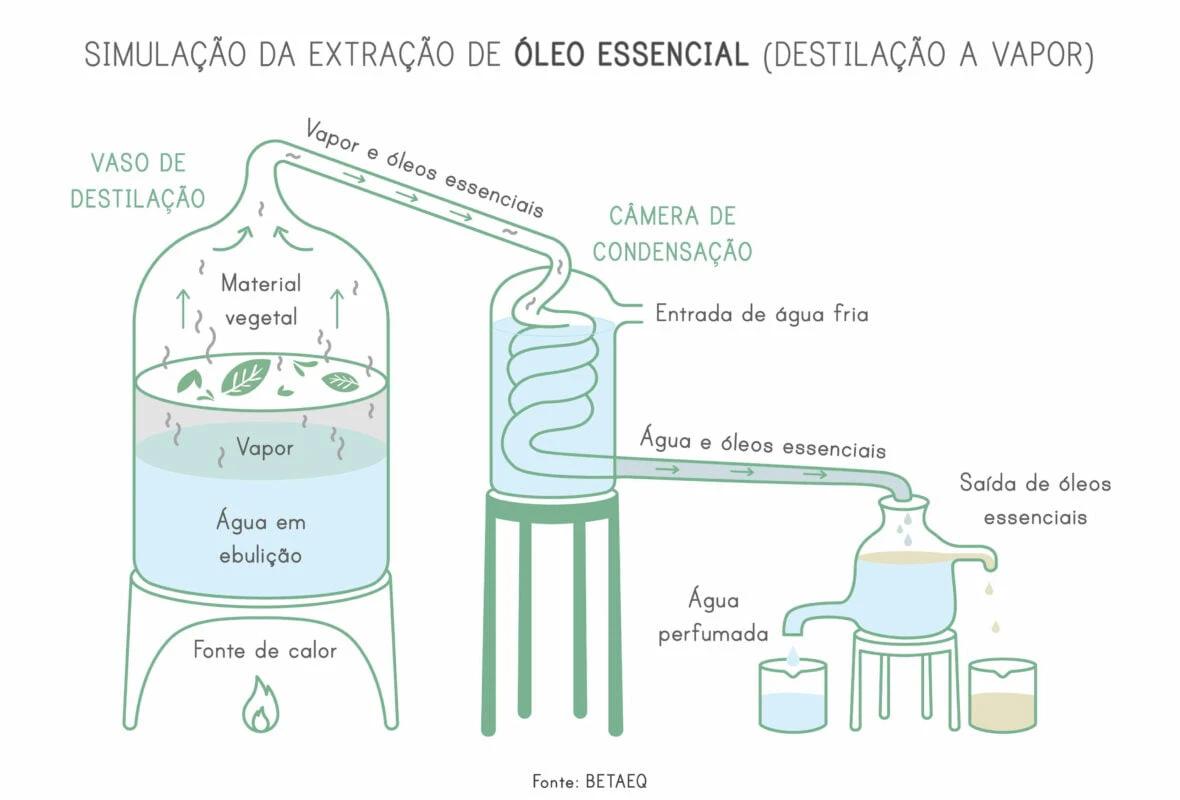 Diagram of steam distillation: the distillation vessel heats the plant material, the aroma-laden steam rises to the condensing chamber and separates into essential oil and scented water (hydrosol)
This aroma-laden steam rises to a condenser, where it cools and turns back into liquid. And this is where the magic of separation happens: oil and water don't mix. The liquid leaving the condenser drips into a container and naturally separates into two layers, like olive oil poured onto water.
- The lighter layer, which rises to the top, is the essential oil: the fat-soluble fraction, concentrated, with the plant's aroma in its purest form.
- The bottom layer, much larger in volume, is the hydrosol (also called floral water or aromatic water): water that carries the plant's water-soluble compounds, at a much lower concentration.
In practice, producing a single liter of lavender essential oil takes, on average, more than a hundred kilos of flowers. The hydrosol is the much larger volume of aromatic water from that same process, also full of the plant's properties, only far more dilute. That is why essential oil costs more: it is the concentrated result of an enormous amount of raw material, while the hydrosol comes out in greater volume and is naturally already dilute.
If you'd like to see this process up close — the boiler, the steam and the two layers separating live — we organize guided visits to the farm where we grow and distill.
Concentration: the difference that changes everything
This difference in concentration defines almost everything else: how each one is used, how safely, and for what.
| Essential oil | Hydrosol | |
|---|---|---|
| What it is | The concentrated, fat-soluble fraction of the aromatic compounds | Aromatic water carrying the water-soluble compounds |
| Concentration | Very high (a small bottle represents kilos of plant) | Low, close to water, with a subtle aroma |
| Use on skin | Almost always needs diluting in a vegetable oil | Can be used directly, undiluted, in most cases |
| Aroma | Intense, long-lasting | Gentle, closer to the smell of the fresh plant |
| Shelf life once opened | Long, if kept away from light and heat | Shorter, because it is water and can become contaminated like any water |
| Price per volume | High | Low |
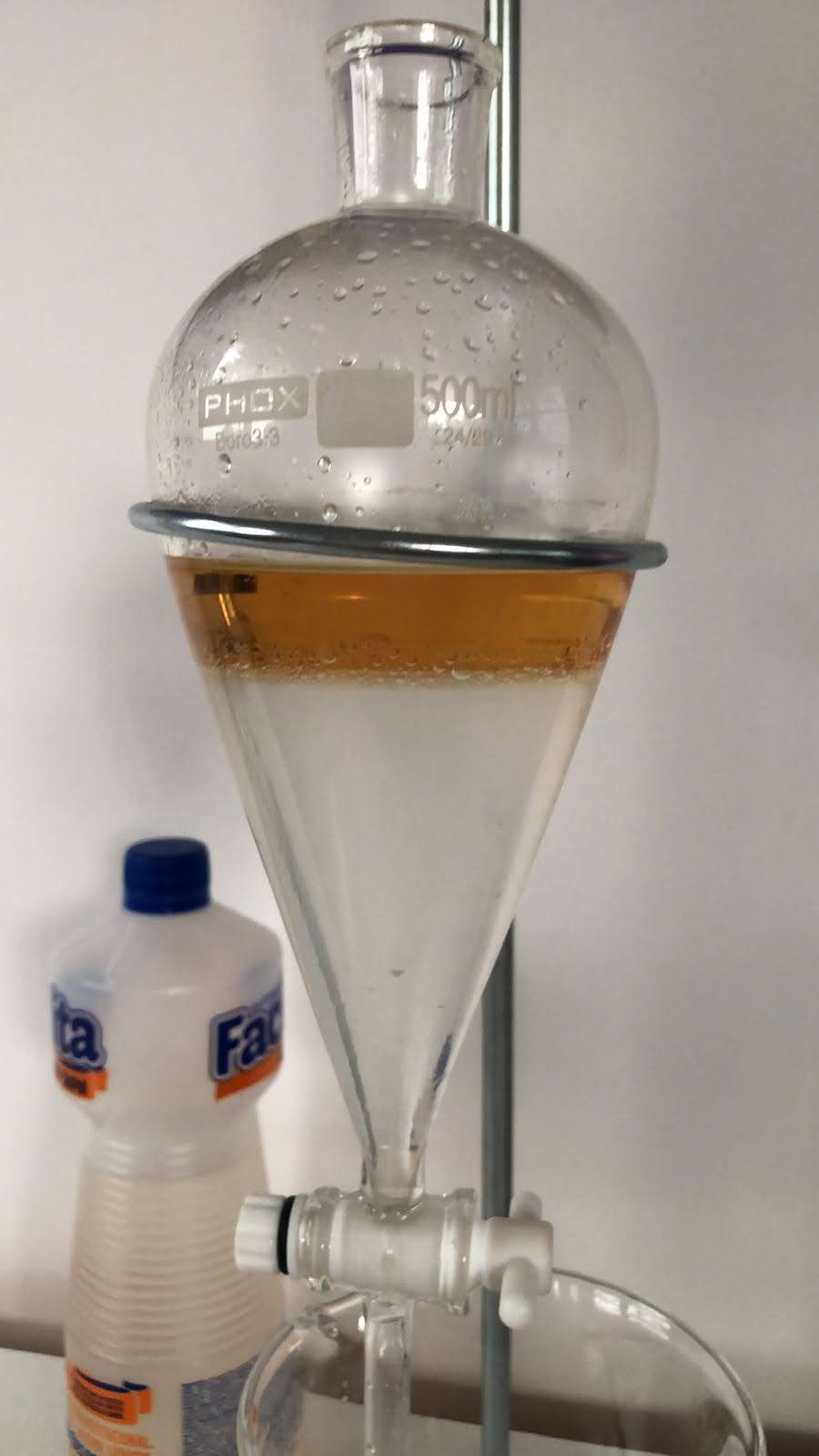 Separating funnel with essential oil (amber layer, on top) already separated from the hydrosol (clear layer, below)
Neither column is "better" than the other: they are different tools. Essential oil is what you use when you need a concentrated aroma in a small amount: a diffuser, a body blend, a personal inhaler. Hydrosol is what you use when you want something gentle enough to apply directly and often: a facial toner, a compress, a room spray.
How to use each one
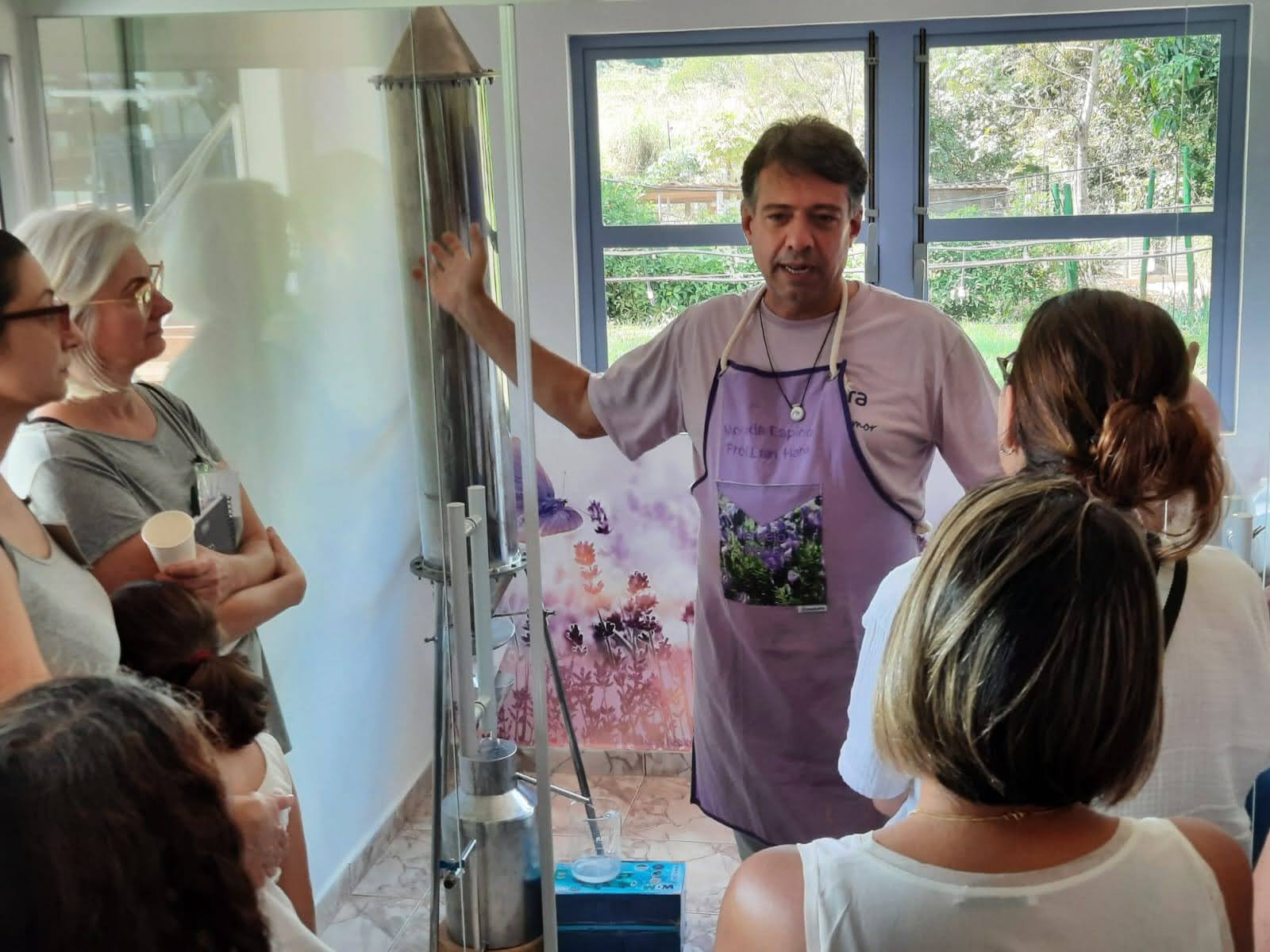 A guide explaining how the still works to a group of visitors during distillation
Essential oil, always with dilution in mind:
- Room diffusion. Water and a few drops in the diffuser, for 20 to 30 minutes. Running it all day doesn't intensify the effect, it only saturates your sense of smell.
- Dry inhalation. One or two drops on a cotton ball or tissue, for occasional use.
- Diluted in a vegetable oil, for use on the skin. Dilution is never optional here.
Hydrosol, usually undiluted:
- Facial toner, sprayed directly on the face after cleansing.
- Compresses, soaking a cloth in the hydrosol to apply to the skin.
- Room or fabric spray, such as for pillows and bed linen.
- Hair finisher, sprayed on damp hair.
Safety: what changes between the two
Undiluted essential oil does not go on the skin. It is the most important rule and the one beginners ignore most often. The reference dilution for body use is one drop of essential oil for every 5 ml of vegetable oil, which works out to roughly 1%; for adults, the body tolerates 2% to 3%, the face calls for something closer to 1%, and children, pregnant or breastfeeding people and those with sensitive skin need even lower dilutions, or should avoid certain oils altogether.
A separate precaution: citrus oils such as bergamot, lemon and orange make the skin photosensitive for up to 12 hours after application. Used on an area that will be in the sun, even when correctly diluted, they can cause stains.
Hydrosol calls for a different kind of care: it is water, and water spoils. Without the preservatives of an industrial cosmetic, a hydrosol can become contaminated over time, especially when exposed to heat, light or repeated contact with hands. Always choose a bottle with a spray valve rather than opening it and dipping your fingers in, keep it away from light and, if you notice a change in color or smell or a cloudy look, throw it away. Our suggestion is to keep it in the fridge: the stable temperature avoids the swings that speed up contamination.
In neither case does the logic of "it's natural, so it can't hurt" apply. Both contain active compounds, only in different proportions. That is exactly why we know what goes into every bottle: the chromatography reports for each plant we distill are published on the lab reports page.
This article doesn't replace an individual assessment: if in doubt, always consult a qualified professional before starting any use, especially if you have a diagnosed health condition, are pregnant or breastfeeding, or are thinking of using it on young children.


